Vertical Gardening Makes Small Kitsap County Spaces More Productive

Space is one of the most common reasons Kitsap County families say they can't grow enough food at home. A narrow side yard, a paved patio, a compact rental property — these feel like dead ends for serious food production. But they don't have to be. Vertical gardening is the strategy that changes the math entirely, and the trellis planter box is the tool that makes it practical, portable, and genuinely productive in Pacific Northwest conditions.
At Roots and Wings Gardening, we work with families across Kitsap, Pierce, and Mason Counties who want real food from real ground — even when that ground is limited. Vertical growing isn't a compromise. Done right, it's one of the most efficient growing systems available to home gardeners.
Why Vertical Gardening Works So Well in Kitsap County
Kitsap County's growing conditions make vertical gardening particularly well-suited to this region. The climate runs cool and moist through much of spring and early summer, which means airflow matters enormously. Plants trained upward on a trellis dry faster after rain, which reduces the fungal pressure that flattens many Pacific Northwest harvests. Powdery mildew, botrytis, and downy mildew all thrive on stagnant, wet foliage — vertical growing is a structural defense against all three.
Beyond disease resistance, vertical growing solves the sunlight problem that plagues compact Kitsap lots. When you train plants upward rather than letting them sprawl, you intercept more light per square foot of ground. That matters enormously in a county where the sun angle runs low and summer windows are short. A well-placed trellis planter box positioned against a south- or west-facing wall or fence captures reflected warmth too, effectively extending the usable season in much the same way a cold frame does. If you're already thinking about season extension, our guide on cold frames and extending the Kitsap County growing season pairs well with a vertical growing setup.
What Is a Trellis Planter Box?
A trellis planter box is exactly what the name suggests: a raised planting container with an integrated or attached trellis structure built directly into it. Rather than managing a separate container and a separate support system, the two are unified. The planter provides rooting depth and soil volume. The trellis — whether a flat panel, an A-frame, an arch, or a T trellis design — provides the climbing structure directly above the root zone.
The T trellis design deserves special mention for Kitsap gardeners working in tight spaces. A T trellis configuration runs a horizontal crossbar at the top of two vertical posts, creating a wide but shallow growing plane. Plants can be trained outward along the horizontal arms, maximizing canopy spread without extending outward into foot-traffic areas. This makes the T trellis particularly practical on patios, decks, and narrow side yards where lateral space is at a premium but overhead clearance exists.
Trellis planter boxes are available in wood, cedar, powder-coated steel, and composite materials. For Kitsap County's wet winters, untreated softwoods will degrade quickly. Cedar and composite options hold up far better under the extended moisture of a Pacific Northwest fall and winter. If you're building your own, line the interior with landscape fabric, not plastic, to allow drainage while retaining soil structure.
Which Crops Belong on a Trellis Planter in Kitsap County
Not every crop benefits equally from vertical growing. In Kitsap County conditions, the following crop families are the strongest candidates for trellis planter growing.
Cucurbitaceae: Cucumbers, Zucchini, and Small Squash
Cucumbers are arguably the best vertical crop for Kitsap County. They climb naturally, produce heavily in compact space, and benefit enormously from the airflow a trellis provides in our wet-start summers. Bush cucumbers can be grown in a trellis planter box with as little as 12 inches of soil depth. Vining types need 18 inches or more. Either way, vertical training keeps the fruit hanging cleanly, easy to spot, and less prone to rot from ground contact.
Zucchini can be trained vertically with some effort — pinching side shoots and tying the main stem upward works on compact varieties like Patio Star and Astia. Small winter squash such as Honey Bear acorn squash and Delicata can be trained on a T trellis with fruit supported by mesh slings made from old pantyhose or fabric scraps. For more on this family's growing habits in Kitsap County, our guide on growing cucumbers in Kitsap County and our squash varieties guide are worth reading before you plant.
Fabaceae: Beans and Peas
Peas and pole beans are natural climbers and among the easiest crops to grow vertically in a trellis planter box. Peas go in early — late February through April in Kitsap County — and perform beautifully against a trellis in the cool, moist weather that defines our spring. Sugar snap peas, snow peas, and shelling varieties all climb readily and produce far more per square foot than any bush type when given vertical support.
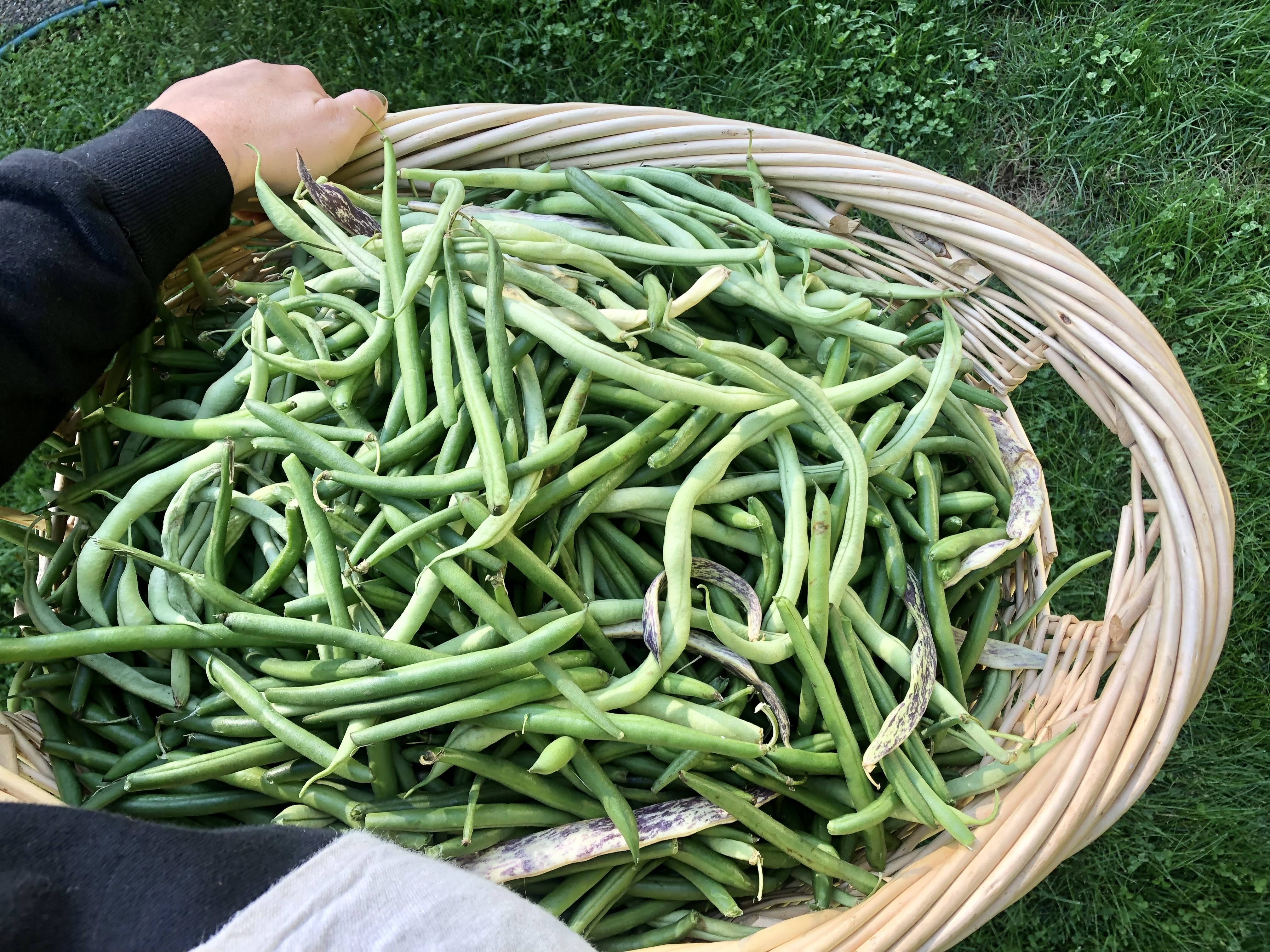
Pole beans follow after soil warms, typically late May through June here. Varieties like Kentucky Wonder, Rattlesnake, and Blue Lake Pole thrive on a trellis and will produce continuously when harvested regularly. From a rotation standpoint, beans and peas also carry a regenerative benefit: as Fabaceae, they fix atmospheric nitrogen into the soil, improving the root zone for whatever follows them in the planter. This matters even in container growing, where soil fertility depletes faster than in ground beds. Our full guide on growing beans in Kitsap County and growing peas in Kitsap County cover timing and variety selection in detail.
Solanaceae: Tomatoes and Peppers
Indeterminate tomatoes are the classic trellis crop, and a deep, well-built trellis planter box can support a full-season tomato plant in Kitsap County when managed correctly. The key is root volume — indeterminate varieties need at minimum 15 to 20 gallons of soil, which translates to a planter box roughly 18 inches deep and 18 inches wide per plant. Compact indeterminate varieties like Juliet, Sungold, and Black Cherry are better candidates for planter growing than large-fruited beefsteak types.
Training tomatoes on a T trellis works well because you can run twine or wire horizontally between the arms, creating a string-weaving system that supports heavy fruit load without stakes. Keep foliage off the trellis structure itself — let the twine carry the stem load instead. Peppers can also be grown in trellis planter boxes. They're less vigorous climbers but benefit from the support structure during fruit set, when the weight of a heavy pepper crop can snap unprotected stems in Kitsap's occasional summer wind events. See our guide on growing tomatoes in Kitsap County and growing peppers in Kitsap County for variety picks suited to our short growing season.
Soil, Depth, and Root Volume in a Trellis Planter Box
The most common failure point in trellis planter growing isn't the trellis — it's insufficient root volume. A shallow container with a tall trellis produces a top-heavy system that underwhelms because the plant simply runs out of resources before the season peaks. Depth minimums for Kitsap County planter growing:
- Lettuce, spinach, herbs: 8 to 10 inches
- Peas, bush beans: 10 to 12 inches
- Cucumbers, pole beans: 14 to 18 inches
- Tomatoes, squash: 18 to 24 inches
For soil mix, avoid straight bagged potting soil in a trellis planter box. Standard potting mixes drain too fast, compress over a season, and lose fertility quickly. Build a custom mix: roughly 50% high-quality compost, 30% coarse perlite or pumice for drainage, and 20% aged topsoil or worm castings. This blend holds moisture without waterlogging, drains freely enough to handle Kitsap's wet spring rainfall, and provides the microbial activity that feeds heavy-producing vertical crops through a full season. If you're new to composting your own organic matter, our beginner's guide to composting in Kitsap County is a practical starting point.
Placement and Light Strategy for Kitsap County Vertical Gardens
Placement decisions for a trellis planter box in Kitsap County should account for two things: sun angle and wind exposure. Our latitude means the sun travels lower in the sky than gardeners accustomed to California or Oregon conditions expect. South-facing walls and fences are your allies. Positioning a trellis planter against a south-facing structure adds radiant heat and reflected light — a meaningful advantage for heat-loving crops like tomatoes and cucumbers that struggle in our cool maritime summers.
Wind exposure matters more in vertical growing than in ground-level beds because a loaded trellis planter acts like a sail. Anchor freestanding trellis planter boxes to a fence or wall when possible, especially if you're using a T trellis configuration with significant horizontal spread. In exposed coastal Kitsap locations — Kingston, Hansville, the Port Gamble shoreline — securing the structure is non-negotiable.
Shade patterns shift significantly through the Kitsap County season. The low sun angle of early spring may cast shadow from a fence that disappears entirely by July when the sun angle rises. Evaluate your planter placement in late April or May, not in early March, before committing your warm-season crops to a specific location.
Companion Planting in a Trellis Planter Box
A trellis planter box creates a natural multi-layer growing system when you think in terms of canopy, midlevel, and ground cover. The trellis handles the vertical crop. The planter box perimeter is available for shorter companions. This is classic polyculture logic applied to a container format.
Under a cucumber or pole bean trellis, the base of the planter supports nasturtiums (which deter aphids and attract beneficial insects), basil (which improves flavor and repels thrips near tomatoes), or low-growing herbs like thyme and oregano that tolerate partial shade cast by the climbing crop. Marigolds, particularly French marigolds, are excellent companions at the planter base — their root exudates deter nematodes, and their flowers bring in predatory wasps and hoverflies that suppress common Kitsap pests. Our guide on companion flowers that boost vegetable yields in Kitsap County has detailed picks for this kind of integrated planting.
Rotating Crops Through a Trellis Planter Box
Crop rotation applies to container growing just as it does to in-ground beds, and it's one of the principles we hold to at Roots and Wings Gardening. Because the same planter box is used year after year, the soil accumulates the pest pressure and nutrient depletion patterns of whatever family you've grown in it. Following the rotation logic we use across all our growing systems — heavy feeders first, then nitrogen-builders, then soil-restorers — keeps planter soil biologically active and prevents the buildup of family-specific problems.
In practical terms for a trellis planter box: if you grew tomatoes (Solanaceae) this season, follow with pole beans or peas (Fabaceae) next season. If you grew cucumbers (Cucurbitaceae), follow with beans or peas, then consider a season of root crops like carrots or parsnips (Apiaceae) to restore soil structure. Refresh the planter soil each season with a top dressing of compost and fresh worm castings rather than replacing the entire volume — this maintains microbial continuity while replenishing nutrients. Our post on cover crops worth sowing in Kitsap County includes options for over-wintering a planter box between seasons, which builds fertility while the trellis structure sits idle.
Succession Planting on a Vertical Structure
One advantage of a trellis planter box that many Kitsap gardeners overlook is succession potential. The same structure that supports snap peas in April can transition to cucumbers in June and then to a fall planting of climbing nasturtiums or even dried bean varieties like Calypso or Rattlesnake through August and September. Managing the transition requires clearing spent vines promptly, refreshing the top few inches of planter soil, and having the next crop start-ready. If you're building a system for continuous harvest, our guide on succession planting for year-round Kitsap County harvests will help you map the timing across the full growing calendar.
Building Versus Buying a Trellis Planter Box
Both approaches have merit in Kitsap County conditions. Pre-built trellis planter boxes available from garden retailers vary widely in quality. The cheapest options use thin wood that won't survive two Pacific Northwest winters without warping or rotting at the base joints. When evaluating a pre-built option, look for:
- Cedar, redwood, or composite construction — not pine or spruce
- Trellis attachment points that are bolted or mortised, not just screwed into the end grain of the box walls
- Interior depth of at least 14 inches for versatile crop use
- Drainage holes across the full bottom surface, not just corners
Building your own trellis planter box allows you to customize dimensions for your specific space, trellis height for your target crops, and materials for Kitsap's wet climate. A basic cedar box with a T trellis built from 1x4 cedar and 2x2 posts is a weekend project that will outlast most retail options by years.
Starting Small and Scaling Up
The most effective way to start with vertical trellis planter growing in Kitsap County is with a single box, a single crop, and a single season of observation. Choose a crop you already know you'll eat — cucumbers, snap peas, or pole beans are the simplest starting points. Get the placement right. Dial in the soil mix. Learn how the trellis performs in Kitsap's wind and rain. Then scale up.
The families we work with at Roots and Wings Gardening who've committed to vertical growing consistently report that one or two well-managed trellis planter boxes outproduces the same square footage of conventional flat-bed growing. The vertical dimension is genuinely untapped in most home gardens, and in a county where usable growing space is often measured in square feet rather than acres, that dimension is worth claiming.
If you're just getting started and need guidance on building healthy soil from the ground up — or the container up — our guide on building raised garden beds in Kitsap County and our post on spring soil preparation in Kitsap County will give you the foundation you need before your first seeds go in.