Why Kitsap County Gardeners Should Start Saving Seeds Now

If you've been growing food in Kitsap County for more than a season or two, you've likely noticed something: the varieties that perform best in our cool, damp maritime climate aren't always the ones dominating the big-box store seed racks. Our short summers, persistent overcast skies, and heavy spring rains create conditions that reward specific genetics — genetics that, with a little intention, you can begin selecting and saving right in your own backyard.
Seed saving is one of the oldest acts of food sovereignty there is. And for Kitsap County families working toward greater self-sufficiency, it belongs at the center of your growing practice — not as an afterthought, but as a foundational habit that compounds in value every single season.
Understanding Open Pollinated Meaning
Before you save a single seed, you need to understand what makes a seed worth saving — and that starts with understanding open pollinated meaning in practical terms.
Open pollinated (OP) varieties are plants that reproduce true to type through natural pollination — wind, insects, or hand transfer — without human intervention in the genetics. Plant an open pollinated tomato, let it go to seed, harvest those seeds, and the plants you grow next year will be essentially identical to the parent. That predictability is the entire point.
This is fundamentally different from hybrid seeds, often labeled F1, which are the result of controlled crosses between two parent lines. Hybrids may offer impressive first-generation performance — disease resistance, uniformity, high yields — but their offspring are genetically unpredictable. Save seed from a hybrid and you'll get a mixed bag of traits, often reverting toward the less desirable characteristics of the parent lines. For seed savers, hybrids are a dead end.
Heirloom varieties are a subset of open pollinated seeds — they're simply OP varieties that have been passed down through generations, typically for 50 years or more. When you buy from a quality seed company and see the word "heirloom," you're seeing open pollinated meaning applied across time. These are seeds with history, with proven regional performance, and often with flavor profiles that modern commercial varieties sacrificed for shelf life and shipping durability.
For Kitsap County growers, open pollinated and heirloom varieties matter for one more reason: local adaptation. When you save seeds from plants that thrived in your specific garden — your specific microclimate, your soil, your rainfall patterns — you are, over time, selecting for genetics that are increasingly suited to your place. This is something no catalog can give you.
What Are QA Seeds and Why Does Seed Quality Matter?
When you see references to QA seeds in the gardening world, this refers to seeds that have passed quality assurance testing — assessment processes that evaluate germination rates, genetic purity, moisture content, and freedom from disease or contamination.
QA seeds matter because not all seeds are created equal, even among open pollinated varieties. A packet of heirloom tomato seeds from one supplier might germinate at 85 percent; the same variety from a less rigorous source might come in at 40 percent. For a home gardener starting seeds indoors in February, that difference is the difference between a full season and a frustrating one.
When evaluating seed sources and building your own saved seed collection, thinking through a QA lens helps. Ask:
- Was this seed grown in clean, uncontaminated soil?
- Was it harvested at the right moment of maturity?
- Was it dried properly before storage?
- Has it been stored at consistent temperature and humidity?
- Do you know its germination rate?
For purchased seeds, seek out suppliers known for rigorous seed selection and transparent germination testing. For your own saved seeds, building these quality habits into your process is what separates a seed collection that lasts from one that disappoints you at planting time. If you're newer to starting your own seeds, our guide on seed starting at home for Kitsap County gardeners covers the fundamentals in detail.
Building Your Seed Saver Kit
A functional seed saver kit doesn't require much. What it requires is the right combination of tools, materials, and disciplined habits. Here's what belongs in every Kitsap County seed saver's toolkit:
Envelopes and Labels
Small paper envelopes — coin envelopes work perfectly — allow seeds to breathe while keeping them contained and labeled. Paper is preferable to plastic for long-term storage because it allows residual moisture to continue escaping. Label every envelope with variety name, date saved, location grown, and any notes about plant performance. "Excellent germination, survived late blight pressure" is the kind of information future-you will be grateful for.
Fine-Mesh Screens
Cleaning seeds — separating them from chaff, pulp, and debris — is essential before storage. Fine-mesh screens in two or three different sizes let you winnow seeds efficiently. For wet-processed seeds like tomatoes and cucumbers, a mesh screen helps drain and rinse after fermentation.
Glass Jars with Tight-Fitting Lids
Once seeds are thoroughly dry, mason jars with tight lids provide excellent long-term storage. Keep jars in a cool, dark, consistently dry location — a basement shelf or the back of a refrigerator drawer both work well. Fluctuating temperature and humidity are the primary enemies of seed viability.
Silica Gel Packets
In Kitsap County's reliably damp climate, moisture management during seed storage is non-negotiable. Including small silica gel desiccant packets inside your storage jars pulls ambient humidity away from your seeds and can significantly extend viability. Reusable silica packets can be dried out in a low oven and used season after season.
A Fermentation Container
For wet-seeded crops — tomatoes, cucumbers, squash — fermentation is the standard seed-cleaning method. The fermentation process breaks down the gelatinous seed coating that can harbor pathogens and inhibit germination. A small glass jar, some water, and three to five days on a warm counter is all this step requires. Viable seeds sink; debris floats.
A Dedicated Notebook or Seed Log
Your seed saver kit is only as valuable as the records that accompany it. A simple notebook — or a spreadsheet if you prefer digital — tracking variety, source, harvest date, germination test results, and growing observations turns your seed collection into a living database that improves every year.
Which Crops to Start Saving First in Kitsap County
Not all crops are equally easy to save seed from, and some require more isolation distance to prevent cross-pollination than a typical home garden can provide. For Kitsap County beginners, start with the simplest crops and build confidence before tackling the more complex ones.
Easiest — Self-Pollinating Crops
Tomatoes, peppers, beans, and peas are self-pollinators, meaning they fertilize themselves before the flower fully opens. Cross-pollination risk is low, and seed saving is straightforward. These are the ideal starting point. Select the best-performing plants — the ones that ripened earliest, showed disease resistance, or produced most abundantly — and let a few fruits fully mature on the vine well past eating stage before harvesting for seed.
If you're growing tomatoes in Kitsap County and want guidance on variety selection before you start saving, our guide to growing tomatoes in Kitsap County covers which varieties are best suited to our maritime climate. Similarly, if you're saving pepper seed, our pepper growing guide will help you identify the strongest performers worth selecting from.
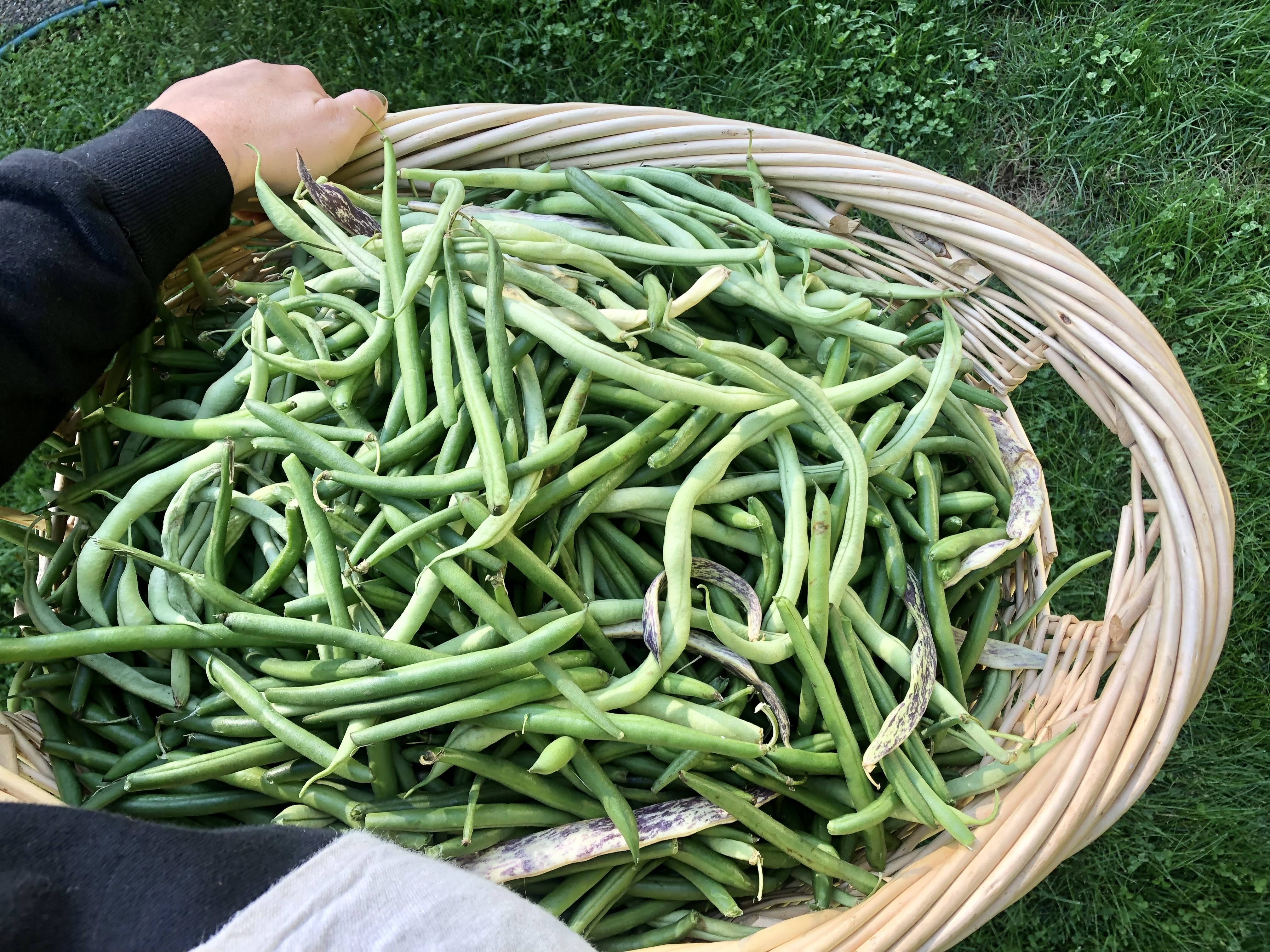
Beans and peas are perhaps the most forgiving of all. Simply leave a few pods on the plant past eating stage until they are dry and papery, then shell and store. For bean growers, our guide to growing beans in Kitsap County and our guide to growing peas are good references for identifying which open pollinated varieties to prioritize.
Intermediate — Wind and Insect Pollinated Crops
Squash, cucumbers, and members of the Brassica family require more attention to isolation because they cross-pollinate readily. Growing only one variety of each within a season is the simplest solution for home gardeners. Our guide to squash varieties in Kitsap County and our cucumber growing guide can help you identify which single variety is worth prioritizing for seed saving each season.
Brassicas — broccoli, kale, cabbage, and their relatives — are biennial, meaning they don't produce seed until their second year. In Kitsap County's mild climate, overwintering Brassica plants for seed saving is entirely feasible. Our kale growing guide includes notes on variety selection that will help you choose OP varieties worth the two-year investment.
Advanced — Biennial Root Crops
Carrots, beets, parsnips, and onions are biennials that also cross-pollinate across varieties and even with wild relatives. For Kitsap County growers ready to take on the challenge, overwintering selected roots and allowing them to bolt and set seed in year two is deeply rewarding. Our guides on growing carrots, growing beets, and growing parsnips will help you identify which varieties are OP and worth the multi-season commitment.
Seed Selection: What You're Actually Looking For
Seed saving without intentional selection is just collecting. The real practice — the one that builds a locally adapted seed collection over years — is selection: deliberately choosing which plants to save seed from based on observed performance.
In Kitsap County specifically, you want to be selecting for:
- Early maturity. Our summers are short. Plants that ripen soonest in your specific conditions are worth prioritizing.
- Disease resistance. Late blight on tomatoes, downy mildew on cucumbers, clubroot in brassicas — these are real pressures in our damp climate. Plants that show resilience are your seed parents.
- Flavor. You're not selecting for a grocery shelf. You're selecting for your table. Taste matters.
- Plant vigor. Strong root systems, healthy foliage, productive yields through the season — these are the genetics you want to carry forward.
Never save seed from the first or the last fruit on a plant. The first often goes to seed under stress; the last may have been stressed by cooling temperatures. Save from the best of the mid-season production, from the healthiest-looking plants in your bed.
Seed Viability: How Long Will Your Seeds Last?
Properly stored seeds remain viable far longer than most gardeners assume, but viability does decline over time. Here's a general guide for common Kitsap County garden crops:
- 1–2 years: Onions, leeks, parsnips
- 3–4 years: Beans, peas, carrots, beets, peppers
- 4–5 years: Tomatoes, squash, cucumbers, kale, broccoli, cabbage
- 5+ years: Lettuce, chard, celery, parsley
These are general ranges under good storage conditions. Cool, dark, and dry extends viability; warm, humid, and fluctuating temperatures shorten it dramatically. In Kitsap County's damp climate, the silica gel packets in your seed saver kit are doing meaningful work.
Always run a germination test before planting saved seeds that are more than two or three years old. Place ten seeds between damp paper towels, keep warm, and count how many germinate in the expected window. If fewer than six out of ten sprout, either sow more densely or refresh your seed stock.
Seed Saving as Regenerative Practice
At Roots and Wings Gardening, everything we do is guided by the principle of regenerative stewardship — working with natural systems rather than against them, building capacity over time rather than depleting it. Seed saving is perhaps the purest expression of that principle available to a home gardener.
Every seed you save is a loop closed. Every variety you select for local adaptation is a small act of ecological intelligence. Every season of saved seed reduces your dependence on supply chains and connects your garden to something older and more resilient than any catalog.
Pair your seed saving practice with healthy soil stewardship — our guide to spring soil preparation in Kitsap County is a good place to anchor that work — and with thoughtful plant rotation using botanical family groupings. Seeds saved from plants grown in well-managed, biologically active soil will out-perform seeds from depleted ground every time.
If you're also thinking about the companion relationships that support your seed-saving crops, our guide to companion planting combinations in Kitsap County and our piece on companion flowers that boost vegetable yields are worth reading alongside this one.
Start Small, Start Now
You don't need to save seed from every plant in your garden this year. Start with one or two crops — a tomato, a bean, a pea. Build your seed saver kit gradually. Keep meticulous notes. Germination test before planting. Select intentionally. Share surplus seeds with neighbors and local growers.
The families in Kitsap, Pierce, and Mason Counties who are building genuine food self-sufficiency are the ones who understand that the seed is the beginning of everything. Not the catalog. Not the store. The seed in your hand, selected from your garden, adapted to your land.
That's where it starts. That's where it has always started.